

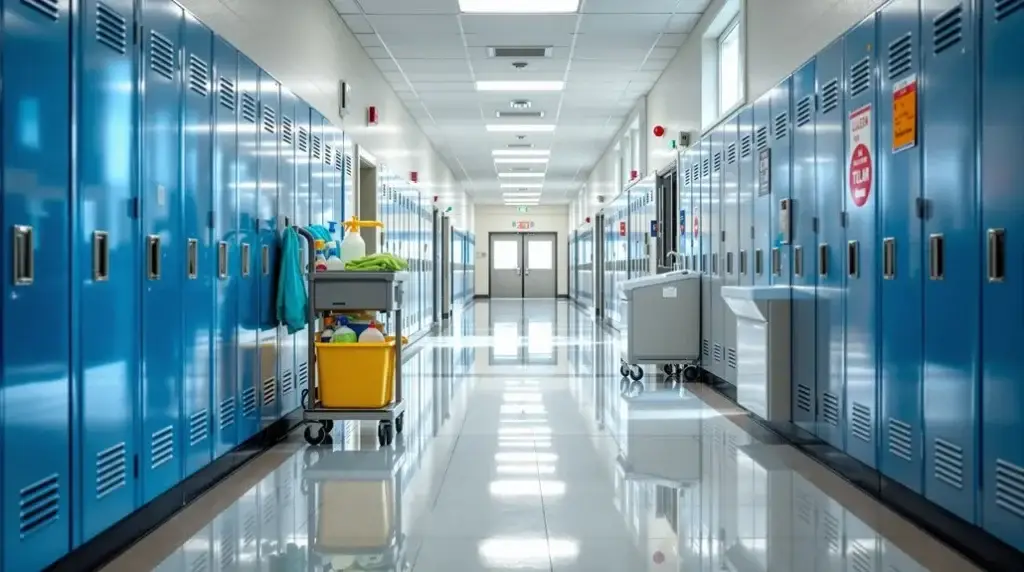
School cleaning directly impacts your students’ health and attendance by supporting systematic disease prevention and improving learning environments. When you maintain rigorous sanitization protocols, you’ll reduce illness-related absences by interrupting transmission pathways on high-touch surfaces. Clean air quality enhances cognitive performance while proper disinfection of restrooms and cafeterias prevents gastrointestinal outbreaks. Your consistent cleaning schedules create inviting atmospheres that boost attendance rates and support long-term student wellness, establishing thorough strategies that maximize educational outcomes.
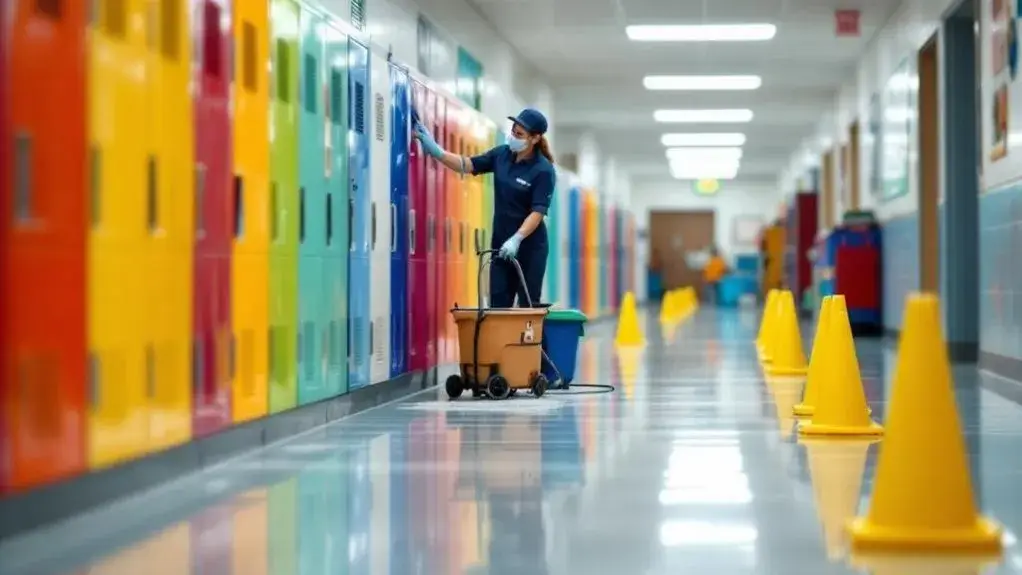
When schools maintain rigorous cleaning protocols, they create powerful barriers against infectious diseases that would otherwise spread rapidly through crowded classrooms and hallways.
You’ll notice fewer outbreaks when custodial staff regularly disinfect high-touch surfaces like doorknobs, desks, and water fountains. Proper sanitization eliminates viruses and bacteria before they can jump from student to student.
Keeping restrooms and cafeterias clean helps prevent gastrointestinal illnesses that can quickly sweep through entire schools.
When you implement thorough cleaning schedules, you’re directly interrupting transmission pathways. This proactive approach protects your students’ health while maintaining consistent attendance rates throughout the academic year.
Beyond surface cleaning, you’ll find that proper ventilation and air filtration systems dramatically affect your students’ cognitive performance.
Poor indoor air quality reduces oxygen levels and increases carbon dioxide, causing drowsiness and difficulty concentrating. Dust, allergens, and chemical residues from cleaning products create respiratory irritation that disrupts learning.
When you maintain clean air through regular HVAC maintenance and appropriate cleaning methods, you’re directly supporting brain function.
Students demonstrate improved attention, better memory retention, and enhanced problem-solving in well-ventilated classrooms. Your commitment to air quality management translates into measurable academic gains and reduced classroom disruptions from coughing or sneezing.
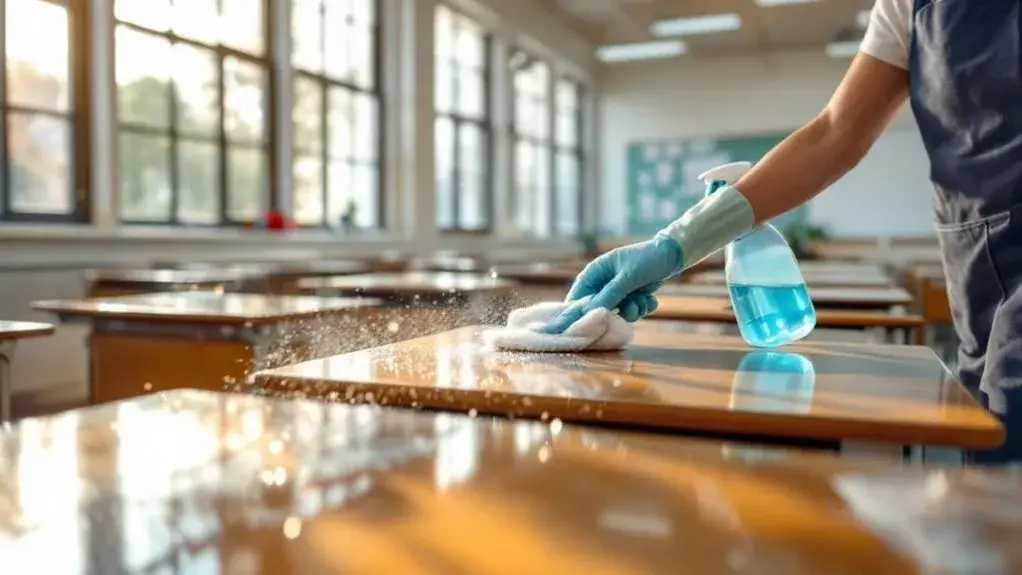
While clean air supports cognitive function, the surfaces your students touch throughout the day pose equally significant health risks. Desks, door handles, keyboards, and shared supplies harbor bacteria and viruses that spread rapidly among children.
You’ll notice fewer absences when implementing daily sanitization protocols targeting high-touch areas. Regular disinfection breaks the transmission cycles of common illnesses such as colds, flu, and stomach bugs.
Focus your cleaning efforts on classroom surfaces students most frequently touch. You’re reducing the risk of pathogens by sanitizing between class periods and maintaining consistent cleaning schedules.
This proactive approach helps keep students healthy and maintain consistent attendance rates.
Clean school environments directly correlate with higher attendance rates, as students and parents associate well-maintained facilities with safety and care.
When you maintain spotless classrooms, sanitized restrooms, and odor-free cafeterias, you’re creating an inviting atmosphere that encourages daily participation. Students are more likely to attend school when they feel comfortable in their surroundings.
You’ll notice fewer absences when families trust that their children aren’t exposed to preventable health risks.
Clean facilities signal professionalism and concern for student welfare, making parents more likely to send their kids to school regularly rather than keeping them home due to cleanliness concerns.
Although the immediate effects of school cleaning are visible daily, you’ll discover that extensive cleaning programs deliver profound health advantages that extend far beyond graduation.
Students who learn in consistently sanitized environments develop stronger immune systems through controlled exposure to manageable levels of pathogens. They’re less likely to develop chronic respiratory conditions, allergies, and asthma that can persist into adulthood.
Comprehensive cleaning protocols also instill lifelong hygiene habits, teaching students to value cleanliness and health maintenance. These environmental lessons shape their future workplace expectations and personal living standards, fostering healthier communities in which former students prioritize sanitation and wellness throughout their lives.
When budget constraints challenge your school’s hygiene goals, strategic planning transforms cleaning from a financial burden into a smart investment.
You’ll maximize resources by implementing microfiber cleaning systems that reduce chemical costs while improving effectiveness. Focus on high-touch surfaces such as door handles, desks, and water fountains, where germs spread fastest.
Train staff to use proper dilution ratios to prevent waste and ensure sanitizer effectiveness. Schedule deep cleaning during breaks to maintain standards without disrupting classes.
Partner with local suppliers for bulk purchasing discounts. Consider green cleaning products that protect student health while reducing long-term maintenance costs by treating facilities more gently.
You’ll want to choose EPA-certified green cleaning products that are non-toxic and fragrance-free.
Look for plant-based cleaners free of harsh chemicals such as ammonia, bleach, and volatile organic compounds.
Microfiber cloths with plain water work effectively for many surfaces.
You should avoid aerosol sprays and opt for ready-to-use solutions instead.
Always check labels for “Safer Choice” certification, and make certain you’re using products specifically designed for educational environments to protect children’s developing respiratory systems.
You should deep clean school carpets and upholstery at least twice per year – once during winter break and again during summer break.
However, high-traffic areas such as main hallways and cafeterias require quarterly deep cleaning.
If you’re dealing with heavy use or spills, you’ll want to schedule additional cleanings.
Don’t forget that regular vacuuming between deep cleans helps extend carpet life and maintains better air quality for students.
You’ll need to focus primarily on restrooms, cafeterias, and high-touch surfaces such as door handles, railings, and water fountains.
These areas require daily cleaning and multiple sanitizations throughout the day. Classrooms, especially desks and chairs, require frequent attention.
Don’t overlook gymnasiums and locker rooms where moisture and physical activity create ideal conditions for bacteria.
Entrances and hallways also demand constant maintenance due to heavy foot traffic and dirt accumulation.
You should guarantee your janitorial staff holds OSHA Hazard Communication certification and bloodborne pathogen training.
They’ll need EPA-approved credentials for applying disinfectants and specialized training in handling biohazardous materials.
Consider requiring Green Seal or similar eco-friendly cleaning certifications to protect student health.
Your team should also complete school-specific safety protocols training, including proper chemical storage and emergency response procedures.
These certifications assure they’re equipped to maintain safe, healthy learning environments.
You can maintain cleanliness standards during budget cuts by implementing strategic measures.
Train existing staff in multi-tasking cleaning techniques and prioritize high-touch surfaces like doorknobs, desks, and restrooms.
You’ll save money by buying cleaning supplies in bulk and using cost-effective, multipurpose products.
Consider involving students in basic tidying activities and establishing volunteer parent cleaning programs.
Focus your resources on critical areas that directly impact health while reducing frequency in less essential spaces.