

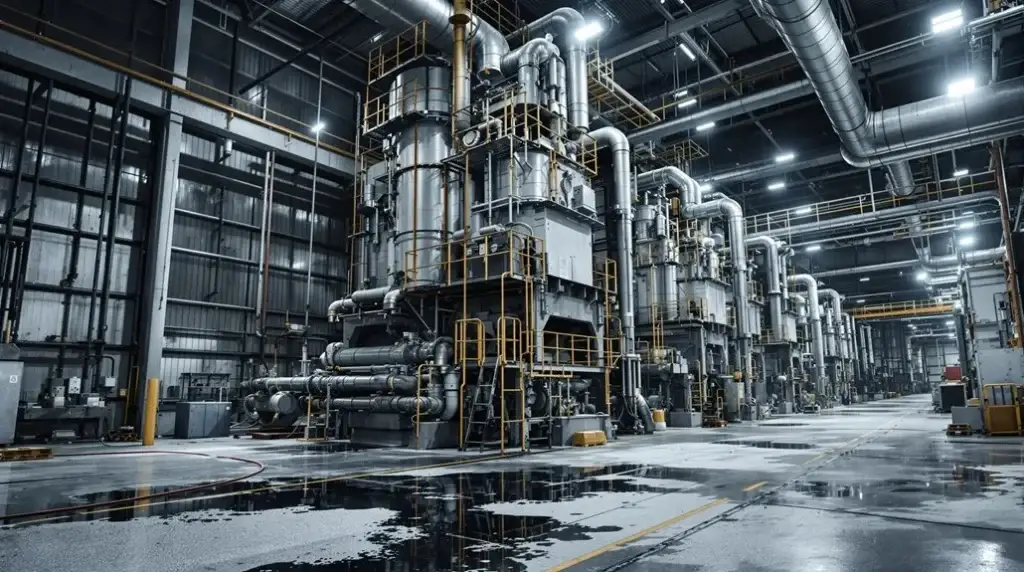
You can’t rely on standard cleaning methods in industrial facilities because they’re not equipped to handle chemical residues, heavy metals, toxic substances, and oil-based contaminants that accumulate from manufacturing processes. Your facility faces unique hazards like confined spaces, high-temperature surfaces, and potentially explosive atmospheres that require specialized equipment, expert knowledge, and strict safety protocols. Without proper industrial cleaning, you’ll risk OSHA violations, EPA fines, operational shutdowns, and serious worker injuries. The following insights reveal how specialized cleaning protects your operations.
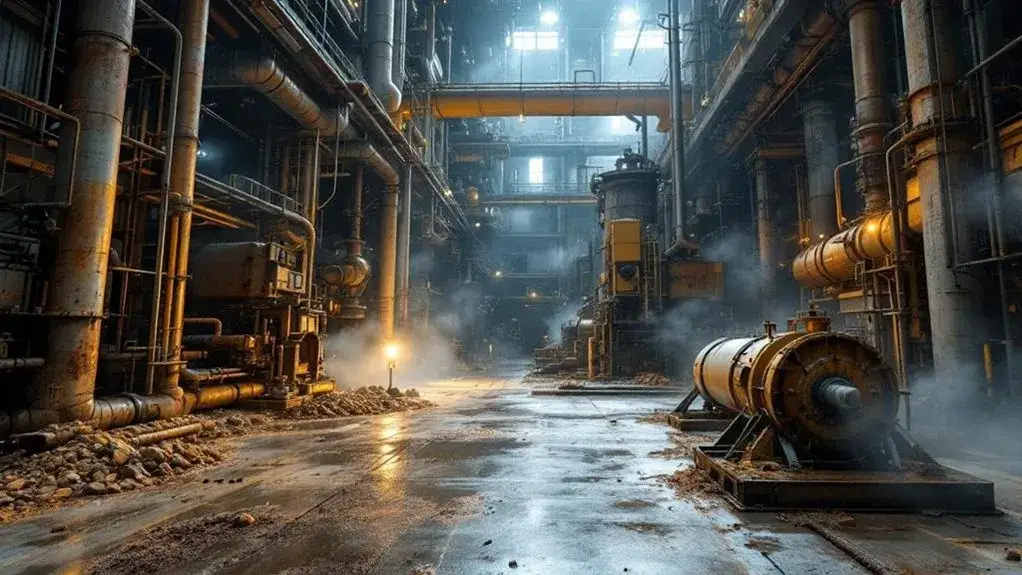
Unlike conventional office buildings or retail spaces, industrial facilities expose cleaning crews to a range of specialized hazards that require specialized knowledge and equipment.
You’ll encounter chemical residues, heavy metals, and toxic substances that can cause serious health complications without proper handling. Manufacturing processes leave behind oil-based contaminants, metal shavings, and corrosive materials that standard cleaning methods can’t address safely.
You’re also dealing with confined spaces, high-temperature surfaces, and potentially explosive atmospheres. These environments require specialized training, protective equipment, and cleaning protocols that extend well beyond typical janitorial services to ensure worker safety and regulatory compliance.
When industrial cleaning operations begin, you must navigate a complex web of federal, state, and local regulations that govern worker safety and environmental protection.
OSHA mandates proper handling of hazardous materials, the use of personal protective equipment, and confined-space entry procedures. The EPA requires compliance with waste-disposal regulations and air-quality standards.
You’ll need documented cleaning protocols, employee training records, and safety data sheets for all chemicals used. Regular inspections ensure compliance with industry-specific standards, such as FDA requirements for food processing facilities and DOT regulations for transportation hubs.
Non-compliance results in hefty fines, operational shutdowns, and legal liability.
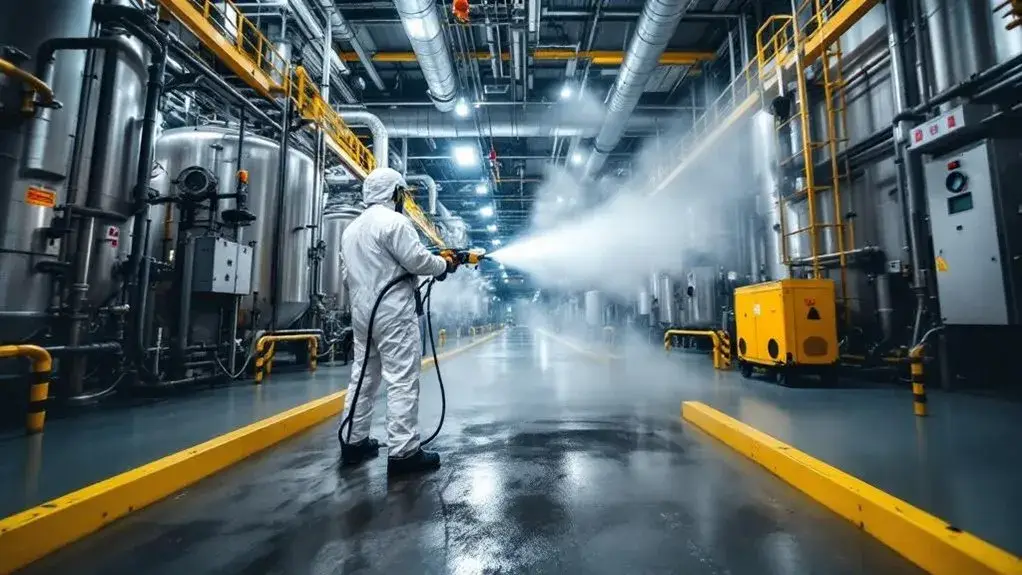
Industrial facilities demand equipment capable of handling the toughest cleaning challenges, from removing decades of accumulated grease and grime to eliminating hazardous chemical residues.
You’ll need high-pressure steam cleaners that penetrate stubborn buildup, industrial-grade degreasers for machinery maintenance, and specialized vacuum systems designed for hazardous materials.
Ultrasonic cleaning technology is effective for intricate equipment parts, while automated scrubbing systems efficiently cover large floor areas.
You can’t rely on standard commercial cleaning tools—they simply won’t withstand industrial environments or deliver the deep cleaning power required.
Professional-grade equipment ensures thorough decontamination while protecting your facility’s valuable assets from damage during cleaning.
Because industrial cleaning involves exposure to toxic chemicals, high-pressure equipment, and hazardous waste materials, you must implement thorough safety protocols that protect every worker on your team.
Start with extensive training programs that cover proper PPE usage, chemical handling procedures, and emergency response protocols. You’ll need to conduct regular safety audits, maintain up-to-date safety data sheets, and ensure that ventilation systems are functioning properly.
Establish clear communication channels for reporting hazards immediately. Don’t forget to implement lockout/tagout procedures for equipment maintenance and create detailed evacuation plans.
Regular safety meetings and refresher training keep protocols current and workers vigilant.
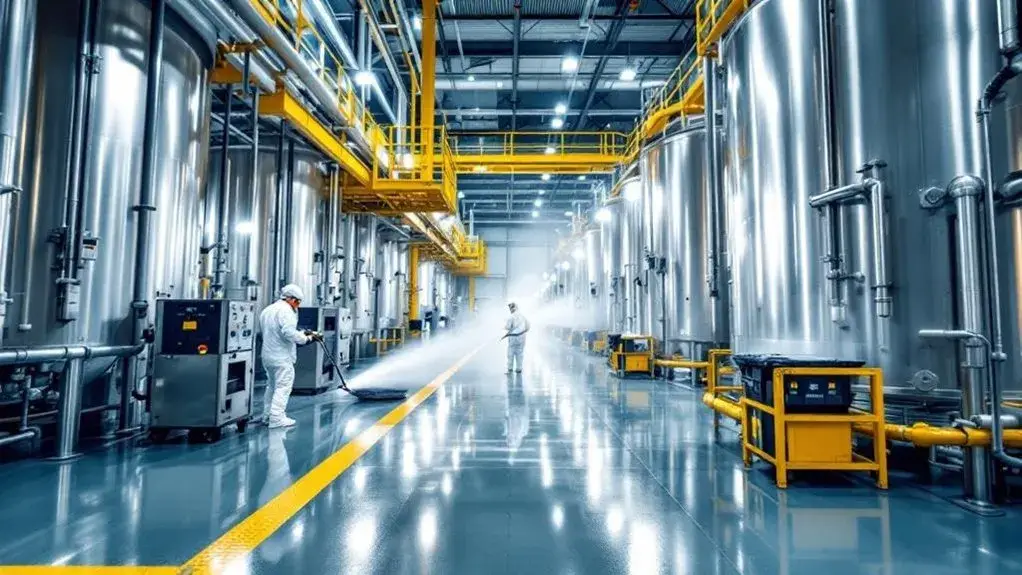
Responsible stewardship of our environment requires establishing comprehensive waste management systems that go well beyond basic disposal requirements.
You’ll need specialized protocols for handling hazardous materials, chemical byproducts, and contaminated cleaning supplies. Your facility must implement proper segregation techniques, ensuring that different waste streams don’t mix and create hazardous reactions.
You’re required to maintain detailed documentation tracking waste generation, treatment, and disposal methods. Professional cleaning teams understand EPA regulations and help you avoid costly violations.
They’ll establish containment procedures to prevent environmental contamination and ensure your waste disposal methods consistently meet federal, state, and local environmental standards.
Three critical factors will determine whether outsourcing your industrial cleaning delivers genuine value: upfront investment versus long-term operational savings, compliance risk reduction, and productivity improvements.
Professional services eliminate equipment purchases, maintenance costs, and staff training expenses. You’ll avoid regulatory fines through consistent compliance with safety standards and environmental regulations.
Specialized cleaning prevents costly equipment breakdowns and extends machinery lifespan. Your employees focus on core operations instead of cleaning tasks, boosting overall productivity.
Calculate potential violation penalties, equipment replacement costs, and lost production time against service fees. Most facilities find that professional cleaning costs significantly less than managing these risks internally.
You should schedule deep cleaning maintenance quarterly for most industrial facilities, but high-risk environments such as food processing or chemical plants require monthly deep cleans.
You’ll want to adjust frequency based on your facility’s contamination levels, regulatory requirements, and equipment sensitivity.
Don’t wait for visible buildup—preventive scheduling reduces downtime and compliance issues.
You can slightly extend intervals in low-dust environments, but never exceed six months between thorough deep cleanings.
You’ll want to look for contractors with OSHA compliance certifications, IICRC credentials for specialized cleaning methods, and EPA certifications for hazardous material handling.
Check they’re bonded and insured with liability coverage.
Look for industry-specific certifications, such as confined-space entry permits or chemical-handling credentials.
Verify they have valid waste-disposal licenses and environmental compliance certifications.
Don’t forget to confirm their workers have completed safety training programs relevant to your facility’s operations.
You can perform industrial cleaning during active production hours, depending on your facility’s operations and safety requirements.
Many contractors specialize in working around production schedules through flexible scheduling, zone-based cleaning, and minimal-disruption techniques.
You’ll need to coordinate with cleaners who understand your processes and can work safely alongside active equipment.
Some critical cleaning tasks may require partial shutdowns for safety compliance.
You’ll typically need 1-3 days for standard industrial cleaning projects, though larger facilities can take up to a week.
The timeline depends on your facility’s size, contamination levels, and specific requirements.
If you’re handling hazardous materials or deep-cleaning equipment, you’ll need additional time.
Most cleaning teams work around your production schedule, so you might see extended project durations when they’re working during off-hours or weekends.
You’ll need thorough general liability insurance (typically $1-2 million), workers’ compensation coverage, and professional liability insurance when hiring industrial cleaning providers.
They should also carry pollution liability insurance for hazardous material handling and bonding insurance for high-security facilities.
Additionally, you’ll want to verify that they have automotive coverage for transporting equipment and chemicals.
Always request current certificates of insurance and confirm your facility is named as an additional insured party.