

You’ll save up to 80% on flooring costs by maintaining your floors regularly instead of replacing them prematurely. Daily debris removal prevents scratches, while immediate spill cleanup stops staining and penetration damage. Weekly deep cleaning and seasonal maintenance tasks, such as applying protective sealants, preserve your floor’s structural integrity year-round. For a 1,000-square-foot space, you’ll spend just $2,500 over five years on maintenance versus $10,000 for complete replacement. The specific strategies below will maximize your investment’s lifespan.
While replacing damaged flooring might seem like the obvious solution when problems arise, you’re likely spending three to five times more than necessary.
Premium hardwood replacement costs $8-15 per square foot, while preventive maintenance runs just $2-3 annually. For a 1,000-square-foot space, that’s $10,000 versus $2,500 over five years.
You’ll also face hidden expenses: furniture removal, installation delays, and business downtime.
Regular cleaning, sealing, and prompt repairs prevent scratches, water damage, and wear patterns that necessitate full replacement.
Smart maintenance scheduling protects your investment by preserving your floor’s appearance and structural integrity while keeping more money in your pocket.
Although all flooring materials experience wear from foot traffic, damage patterns vary dramatically depending on your floor’s composition and surface treatment.
Hardwood floors develop scratches from abrasive particles and lose their protective finish over time.
Tile and stone surfaces show wear primarily at grout lines, where dirt accumulates and weakens joints.
Vinyl and laminate floors suffer from surface scratches that create dull pathways, while carpet fibers compress and trap debris that acts like sandpaper with each step.
Understanding your floor’s specific vulnerabilities helps you implement targeted protection strategies that address the most damaging aspects of daily use.
Since prevention costs far less than replacement, developing consistent daily cleaning habits protects your flooring investment more effectively than any restoration technique.
You’ll maximize your floors’ lifespan by implementing these fundamental practices:
These simple habits prevent costly repairs while preserving your floors’ appearance and structural integrity.
Beyond daily maintenance, you’ll need weekly deep cleaning sessions to tackle embedded dirt and grime that regular sweeping can’t reach.
Start by thoroughly vacuuming with appropriate attachments for your floor type. For hardwood, use a damp mop with manufacturer-approved cleaners, working in small sections.
Tile floors benefit from scrubbing grout lines with a specialized brush and pH-neutral solution. Laminate requires minimal moisture—spray cleaners work best.
Stone surfaces need stone-specific products to avoid etching. Always test cleaning products in inconspicuous areas first.
Move furniture periodically to clean underneath, preventing permanent indentations and ensuring even wear across the entire floor.
While weekly cleaning helps maintain your floor’s appearance, seasonal maintenance addresses the larger changes that occur throughout the year and can significantly extend your flooring’s lifespan.
Spring: Deep clean grout lines and apply protective sealants to prevent moisture damage from increased humidity.
Summer: Install UV-blocking window treatments and reapply floor finishes that may have worn thin during high-traffic periods.
Fall: Strip away summer’s accumulated residue and apply fresh protective coatings before winter’s harsh conditions arrive.
Winter: Maintain consistent indoor humidity levels and place protective mats at entrances to prevent salt and moisture damage.
These targeted seasonal interventions preserve your flooring’s structural integrity year-round.
Although small flooring issues might seem insignificant at first glance, they’re often early warning signs of problems that can cost thousands to repair if left unchecked. You’ll save money by catching these issues early and addressing them promptly.
| Issue Type | Early Warning Signs | Quick Action |
|---|---|---|
| Water Damage | Discoloration, soft spots, musty odors | Fix leaks immediately, dry thoroughly |
| Scratches/Dents | Surface marks, gouges, worn finish | Apply touch-up products, refinish sections |
| Loose Materials | Squeaking, shifting, gaps between boards | Re-secure fasteners, fill gaps professionally |
Regular inspections help you spot problems before they escalate into costly replacements.
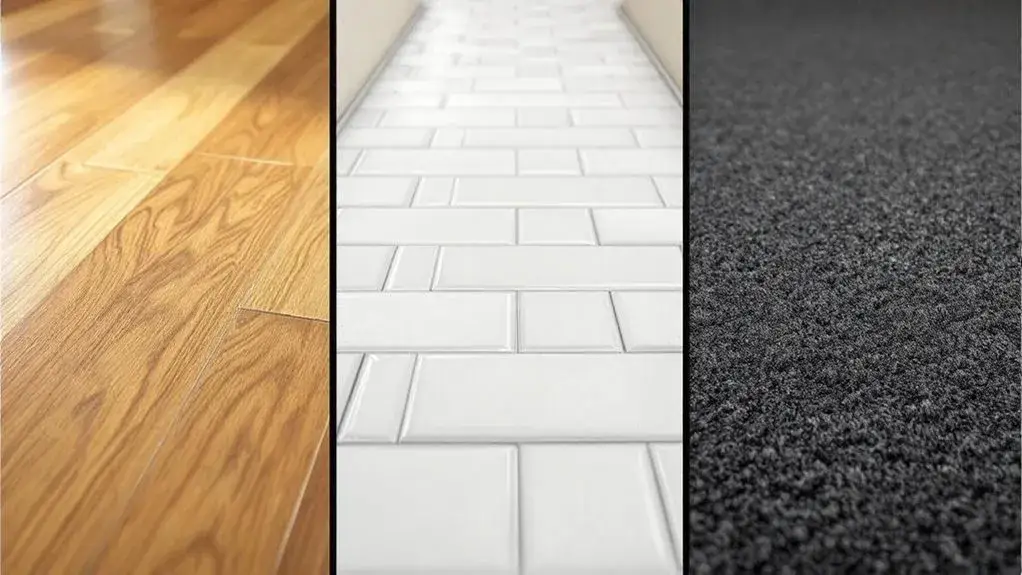
Each flooring type requires a distinct maintenance approach to maximize its lifespan and performance.
You’ll need tailored strategies that address your floor’s unique vulnerabilities and characteristics.
Hardwood floors demand gentle cleaning with pH-neutral products and immediate moisture removal.
Tile surfaces benefit from regular grout sealing and alkaline cleaners for deep sanitization.
Carpeted areas require frequent vacuuming with proper suction settings and professional steam cleaning annually.
Your maintenance routine should include:
Beyond your cleaning and maintenance routines, environmental factors greatly impact your floor’s structural integrity and appearance.
Maintaining humidity levels between 30% and 50% prevents hardwood from warping, cracking, or shrinking. Excessive moisture causes wood expansion and promotes mold growth beneath carpets.
Temperature fluctuations stress flooring materials, creating gaps in hardwood and loosening adhesives in vinyl and laminate.
You’ll need dehumidifiers during humid seasons and humidifiers in dry winter months. Keep temperatures consistent between 60-80°F to minimize expansion and contraction cycles.
Monitor your home’s climate with digital hygrometers and address moisture sources, such as leaks, immediately. Proper environmental control prevents costly repairs and premature replacement.
While routine care keeps your floors looking great, certain maintenance tasks require professional expertise to avoid costly mistakes.
You can handle daily sweeping, weekly mopping, and basic spill cleanup yourself. However, complex issues demand professional intervention.
Call experts for:
Professional cleaning services cost more upfront but prevent irreversible damage from improper techniques or products.
They’ll extend your flooring’s lifespan considerably, protecting your investment.
Since proper floor care cleaning requires ongoing investment, you’ll want to track whether your maintenance efforts are paying off. Monitor key indicators to assess your floor’s condition and the effectiveness of your care program.
| Timeline | Signs of Success | Red Flags |
|---|---|---|
| Monthly | Even shine, minimal scratches | Dull spots, increasing stains |
| Quarterly | Consistent appearance, easy cleaning | Visible wear patterns, damage |
| Annually | Original beauty maintained, no major repairs | Costly fixes needed, replacement considerations |
Document your floor’s condition with photos and maintenance logs. Calculate your annual care costs versus potential replacement expenses. You’ll discover that consistent maintenance typically costs 80% less than premature flooring replacement.
You’ll want high-performance floor sealers and commercial-grade wax for hard-surface floors in high-traffic areas.
Anti-fatigue mats work great at entrances to reduce wear from foot traffic.
Consider polyurethane coatings for concrete floors and specialized protectants for stone or tile.
Don’t forget entrance matting systems that trap dirt before it reaches your flooring.
These products greatly reduce daily wear and tear while maintaining your floors’ appearance.
Pets and children significantly reduce your flooring’s lifespan due to different types of damage.
Your pets’ claws scratch hardwood and luxury vinyl, while accidents stain carpets permanently.
Children’s spills and dropped toys dent softer materials like laminate.
Hardwood typically loses 2-3 years of expected life, carpets need replacing 30% sooner, and tile grout requires frequent resealing.
You’ll find that ceramic tile is most resilient, lasting nearly its full lifespan despite heavy use from both.
Yes, improper installation can absolutely void your flooring warranty, even if you maintain it perfectly.
Manufacturers typically require professional installation in accordance with their specific guidelines. If you’ve installed flooring incorrectly or hired unqualified installers, you’ll lose warranty protection regardless of your maintenance efforts.
Always use certified installers and keep installation documentation. Poor installation creates structural issues that excellent cleaning can’t fix, leaving you without recourse when problems arise.
Homeowners insurance typically covers sudden water damage from burst pipes or appliances, but it won’t cover gradual leaks or flooding.
Most policies exclude maintenance-related issues and normal wear. You can purchase separate flood insurance for natural disasters.
Some insurers offer additional coverage for accidental damage, such as scratches or spills.
You should review your policy carefully and consider umbrella coverage for expensive flooring materials that exceed standard replacement limits.
You can install smart moisture sensors that detect water leaks before they damage your floors and send instant alerts to your phone.
Temperature and humidity sensors help you maintain ideal conditions that prevent warping and cracking.
Motion-activated sensors can identify high-traffic areas needing extra attention, while vibration sensors detect structural issues early.
These automated systems let you address problems immediately, protecting your flooring investment without constant manual monitoring.